

 Türkçe
 English
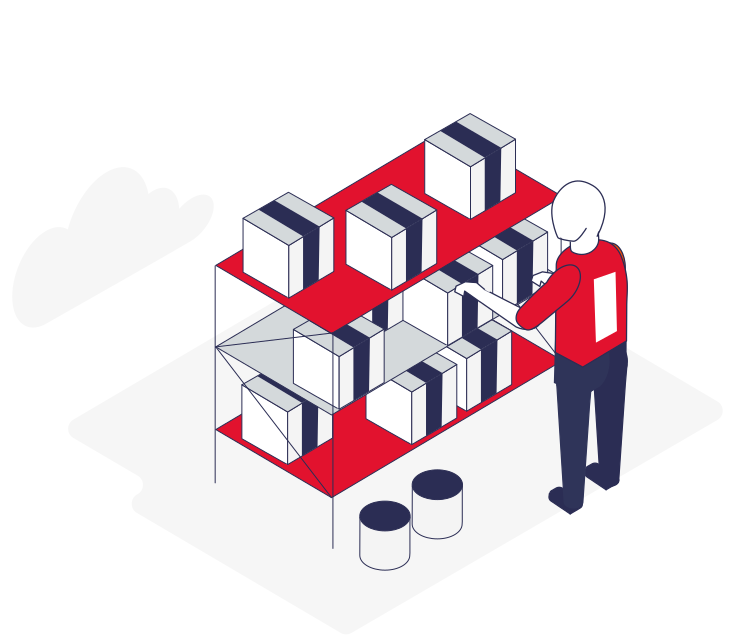
In logistics and warehousing operations, inventory doesn't just "enter" and "exit"; in most businesses, a significant portion of inventory constantly moves between facilities, warehouses, branches, production areas, and temporary storage sites. Managing these movements correctly is critical for inventory accuracy, delivery times, production continuity, and cost control. This is where Transfer Management becomes one of the backbone processes of a WMS.
Transfer management is a set of processes that enables the controlled movement of a stock unit (product, package, pallet, lot/serial inventory) from one location to another or from one warehouse to another. This movement can be between warehouses, or it can be a shelf-to-shelf relocation within the same warehouse, a transfer to an intermediate stock area near production, or branch replenishment movements. For details on the Centra WMS solution: Transfer Management (Centra WMS).
Why is Transfer Management with WMS Critical?
1) What is Transfer Management and What Types of Transfers Does it Cover?
Transfer management is the process of managing the movement of inventory to different locations based on planned or immediate needs. The main goal here is to ensure that both physical and system records are fully consistent during "inventory movement." Otherwise, the inventory shown in the system will be disconnected from the inventory in the field, and the operation will face a "shadow inventory" problem.
Main types of transfers
- Intra-warehouse transfer: from location to location (shelf change, repositioning, reslotting)
- Inter- warehouse transfer: between facility/branch/warehouse
- Production transfer: from warehouse to production staging area or next to the production line.
- Replenishment: Transferring feed from upper shelves to lower shelves to replenish the pick area.
- Quarantine/quality transfer: Area change according to status after QC decision.
The impact of the transfer on the business.
When transfers are not managed correctly, shipping delays, production stoppages, excess safety stock, increased internal transportation costs, and high inventory discrepancies occur. Disciplining transfers with WMS directly reduces these effects.
2) Typical Problems Encountered in Transfer Processes Without WMS
Transfer processes often proceed "invisibly": a forklift picks up a pallet and places it elsewhere; however, the system either fails to record this movement or doesn't record it at all. This quickly undermines location reliability. As a result, warehouse search times increase, count discrepancies widen, and shipment accuracy decreases.
The most common mistakes
- Location record not updated even though pallet/package moved
- Mixing and loss of traceability in lot/batch based products.
- The pick-up area will show "out of stock" because no replenishment has been performed.
- Disruption of the dispatch-receipt matching during inter-warehouse transfers.
- A product under quarantine status was mistakenly moved to a free zone.
Cost and time impact
Transfer errors generate the most "search and re-carry" costs. Warehouse workers search for products instead of doing their actual work; forklift traffic increases, the risk of workplace accidents rises, and operational capacity decreases.
3) Transfer Request, Planning and Authorization
Transfers should not be done randomly; every transfer should have a reason, a goal, and someone responsible for it. WMS records the transfer request and plans the work with approval and priority rules. This way, the forklift operator clearly sees the answer to the question, "What am I transporting based on?"
Sources of the transfer request
- Stock repositioning plan (slotting)
- The pick range has dropped to a minimum level (replenishment triggered)
- Branch/facility stock requirement (inter-warehouse replenishment)
- A quality decision: the transition from quarantine to open space.
- Production plan: intermediate stock request alongside the production line.
Authorization and role-based control
Especially for high-value products, quarantine statuses, or hazardous material classes, transfers should be carried out with role-based authorization. The WMS (Warehouse Management System) can define who can transport to which zones, which product groups can be handled, and which approval mechanisms are required.
4) Intra-Warehouse Transfers: Location Reliability and Re-slotting
Warehouse transfers are an integral part of daily operations. Re-slotting is necessary due to reasons such as seasonal changes, product volume variations, and bringing fast-rotating products closer to the picking area. Additionally, situations such as clearing a blocked shelf or establishing a new shelf arrangement create a need for transfers.
Why is re-slotting done?
- Increasing delivery speed by reducing picking distance.
- To reduce forklift traffic and internal transportation costs.
- Bringing fast-turning SKUs to accessible locations.
- Product safety and reducing the risk of damage.
The golden rule for location accuracy.
"Scan it the moment you transport it." In WMS, location accuracy is maintained when the transfer task is confirmed with source and destination barcodes. Record entries made after the transfer are often delayed and prone to errors.
5) Inter-Warehouse Transfers: Shipment-Receipt Matching and Traceability
Warehouse transfers require the seamless synchronization of two separate operations: the outgoing warehouse and the receiving warehouse. The critical issue here is the accurate management of the transfer's "in transit" status and the swift and error-free acceptance at the receiving warehouse. WMS documents the outgoing transfer, carries pallet/package IDs, and provides matching on the receiving side.
Checkpoints during transfers between warehouses.
- Transfer order and target warehouse/branch verification.
- Pallet/package identification (SSCC/label standard)
- Consistency of shipping list and quantity.
- En route status and ETA tracking (if necessary)
- Barcode-based acceptance and deviation management at the receiving warehouse.
Examples of deviation management
During transfers, missing packages, damaged pallets, or incorrect product shipments may occur. WMS records the deviation and generates actions for both the source and destination warehouses; thus, the question of "where did it get lost?" is managed with data.
Transfer Management in Centra WMS: Functions, KPIs, and Implementation Guide
6) Task-Based Transfer: Operator Routing and Mobile Barcode
The approach that makes transfers efficient is "task-based" work. The WMS assigns the transport task to the operator, clarifying the source from which to pick up, where to place it, the quantity to transport, and which equipment to use. Verification is done by scanning barcodes with a mobile handheld terminal.
Benefits of task-based transfer
- Task order and priority become clear; chaos in the field decreases.
- The risk of moving to the wrong location decreases.
- Transfer times become measurable.
- New staff adaptation accelerates.
An operational tip
Defining a separate priority level for “urgent replenishment” jobs in the warehouse reduces pick-up area stockout situations and maintains shipping SLAs.
7) Replenishment Management: Automatic Pick Area Feeding
In many warehouses, the picking area is central to the speed of shipment. However, the picking area has limited capacity; fast-moving products are held here. When stocks run low, replenishment from upper shelves to the picking area is necessary. WMS can create replenishment tasks based on minimum-maximum levels or order wave requirements.
Replenishment triggering methods
- Min/Max: Triggers if the pick location stock falls below the minimum.
- Wave-based: triggers according to the stock required for the planned wave.
- ABC-based: more aggressive replenishment rules for fast-turning products.
The effect of incorrect replenishment.
Excessive replenishment generates unnecessary internal transportation costs. Insufficient replenishment, on the other hand, creates stock shortages in the pick-up area. The way to strike this balance is to monitor the actual consumption rate with WMS reports and dynamically update the thresholds.
8) Status and Zone Management: Quarantine, Free Stock and Security
Transfer management is not simply about “relocation”; it often involves a change of status. For example, a product that has received QC approval is transferred from quarantine to a free zone. Hazardous chemical products must be kept in compliant zones. WMS defines transfer permits and mandatory target zones according to status.
Status-based transfer rules
- Quarantine items can only be transported to quarantine zones.
- Free stock cannot be moved to free zones without QC approval.
- Hazardous materials are required to be directed to compliant storage areas.
- Locked zones and access control are implemented for high-value items.
Gains in terms of compliance and control.
These rules reduce security risks and regulatory non-compliance that can arise from improper storage; they also strengthen the audit trail.
9) Integration and Document Flow: The ERP and Finance Aspects of the Transfer
Transfers between warehouses often affect costs and accounting records: stock leaves one warehouse and enters another; "stock in transit" occurs. WMS's compatibility with ERP is critical for opening and closing transfer orders with accurate references. This reduces inventory discrepancies and reconciliation problems.
Document set (example)
- Transfer order / transfer request
- Transfer packing list
- Pallet/package labels and IDs
- Acceptance report and deviation report at the target warehouse.
Ease of agreement
When every step of the transfer is recorded, questions such as "when did it leave, when was it accepted, how long was it in transit?" become clear. This transparency provides a significant advantage in financial closings.
10) KPIs and Continuous Improvement: Managing Transfer Performance
Transfer management is an invisible determinant of warehouse efficiency. Through WMS, transfer times, replenishment success rate, location accuracy, and transfer deviations can be measured. These KPIs empower warehouse layout, equipment utilization, and personnel planning decisions.
Example KPI set
KPI Definition Operational Commentary
Transfer Cycle Time The period from the opening of the transfer window to its completion. It shows the efficiency of domestic transportation.
Location Accuracy (%) The match rate between the product's location record in the system and its physical location. It affects search times and count discrepancies.
Replenishment Completion on Time On-time completion rate of pick area feeding tasks It protects shipping SLAs.
Transfer Deviation Rate The percentage of transfers resulting in missing/excess/incorrect products. Critical for root cause analysis.
Stock Time in Transit The time between departure and acceptance in inter-warehouse transfers. It demonstrates planning and transportation discipline.
Quick start plan for the application.
- Clarify your transfer types (intra-warehouse, inter-warehouse, replenishment, QC).
- Define your location and zone structure (quarantine, open, dangerous, locked down).
- Establish a task-based transfer and barcode verification discipline.
- Determine the replenishment thresholds (min/max) using actual consumption data.
- Enhance shipping and receiving matching during inter-warehouse transfers with standardized documentation/labels.
- Define your set of KPIs and optimize them through monthly improvement meetings.
Improving transfer management with WMS increases inventory accuracy, maintains shipping and production continuity, reduces internal transportation costs, and strengthens the audit trail. For more details, please visit the Centra solution page: Centra WMS Transfer Management.
