Transfer Management

Plans the movement of products between warehouses according to the Shipment Management rules and selects the correct sequence for the Expiry Date, then completes the transfer in a controlled manner.

Transfer between warehouses is one of the operations that, while being the most repeated, also leads to the most errors on the site. The Transfer Management module, by managing the steps of the issue warehouse, receipt warehouse, transfer scope, and operation steps in a single screen, ensures that the process is smooth, fast, and traceable. Thus, errors such as wrong warehouse, wrong serial number, and missing transfer are prevented from occurring.

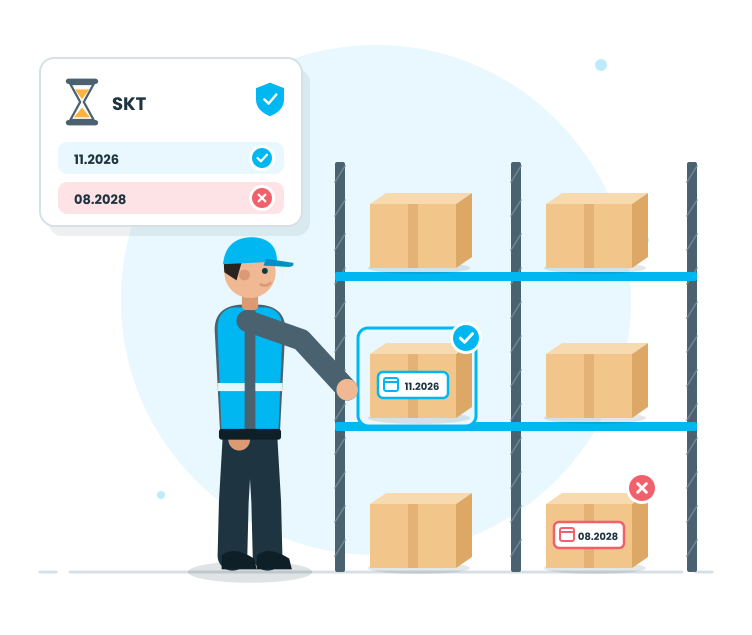
The module, besides just opening the registration, actually executes the transfer on-site. Rules that bring the Expiry Date approaching products to the front, controls the misuse of serial numbers, and implements permission-based closure ensure that the transfers progress as a 'disciplined workflow'.


Request a Demo

Transfer Management
Transfer Management
Transfer Management is an operational module for creating inter-warehouse transfer records, initiating transfer operations, applying expiry-date rules when selecting products and serial numbers, completing transfers through step-by-step warehouse-floor workflows, and managing results with…
Transfer Registration Creation
Transfer and Scope Information
Starting the Operation
Expiry Date (SKT) and Serial Number Rules
Completion and Tracking
Transfer Registration Creation

Transfer Registration Creation

At this stage, the transfer process is initiated and a single reference registration for the transfer is created. Upon opening the registration, the operations list is assigned; teams progress with the same data.

Features

  •  Creation of a new transfer registration
  •  Safe start with draft status
  •  Quick access via a list
  •  Cambio de Registro de Salida
  •  Anular y Controlada Eliminación de Registro de Salida
  •  Filtering to search for transfer registrations

Creation of a new transfer registration
Transfer is initiated in a single screen; the process progresses step by step until it is ready for the site.

Safe start with draft status
The registration is opened, but the user is not forced to close the scope without understanding it; it progresses by controlling it.

Quick access via a list
Transfer registrations are visible; it is clear at a glance which transfer is waiting or is at a later stage.

Cambio de Registro de Salida
The operations can be arranged before the entry; the risk of incorrect data on-site is reduced.

Anular y Controlada Eliminación de Registro de Salida
Incorrectly opened registrations can be canceled in a controlled manner; the workflow discipline is maintained.

Filtering to search for transfer registrations
Transfers are found based on criteria such as date range, status, warehouse, and user; the site speed increases.

Transfer and Scope Information

Transfer and Scope Information

This is the stage where we define the 'from where to where' and 'which scope' for the transfer. If this step is done correctly, chaos is reduced on-site and the operation speed increases.

Features

  •  Selection of the issue warehouse
  •  Selection of the receipt warehouse
  •  Defining the date range for planned transfers
  •  Description/Note field
  •  Defining the transfer tags
  •  Defining the scope based on the quantity/unit logic
  •  Preparing the operation for the target

Selection of the issue warehouse
The destination warehouse for the product is defined; the stock validity and site preparation are strengthened.

Selection of the receipt warehouse
The destination warehouse for the product is defined; the transfer after that makes the placement and organization smoother.

Defining the date range for planned transfers
The operation is planned; the workload and shift scheduling are supported.

Description/Note field
Operation notes do not disappear; there is no information gap during the team changeover.

Defining the transfer tags
It is clear what products are being transported; the question 'What are we carrying on-site?' is removed.

Defining the scope based on the quantity/unit logic
If the quantities are entered correctly, the operation steps are completed faster; the risk of missing or excess transportation decreases.

Preparing the operation for the target
The routing is defined based on the receipt warehouse; the internal site organization is maintained.

Starting the Operation

Starting the Operation

At this stage, the transfer starts on-site. The registration 'joins the operation' and the team progresses step by step.

Features

  •  Starting the operation
  •  Pending work visibility
  •  Defining the operation steps
  •  Not being able to continue from the last location
  •  Defining the permission-based operation steps
  •  Real-time validation messages during the operation

Starting the operation
Transfer entries will seamlessly flow into the execution process.

Pending work visibility
It clarifies which transfers are pending and which are in progress; operation management becomes easier.

Defining the operation steps
The crew doesn’t need to ponder, 'What’s the next step?'; the system guides the steps.

Not being able to continue from the last location
Even partial operations don’t break the process; you continue from where you are.

Defining the permission-based operation steps
Operational users and warehouse managers’ permissions are separated; critical steps are under control.

Real-time validation messages during the operation
Correct routing is directed to the delivery area with warnings for obvious errors.

Expiry Date (SKT) and Serial Number Rules

Expiry Date (SKT) and Serial Number Rules

This layer ensures the quality of the transfer operation. Correct serial selection and SKT approach are implemented here; incorrect serial usage is prevented.

Features

  •  Recommendation for SKT-based product selection
  •  Accepting SKT from distant serials
  •  Serial/lot-based selection discipline
  •  Warning for incorrect serial selection
  •  Operational verification and control points
  •  Rule-based flow with standard transfer

Recommendation for SKT-based product selection
The system prioritizes the selection; stock aging and organization are strengthened.

Accepting SKT from distant serials
Incorrect choices are preempted; quality and operational standards are maintained.

Serial/lot-based selection discipline
Transfer traceability improves; where did the serial go is clear.

Warning for incorrect serial selection
Users are immediately warned for incorrect selections; corrective actions are performed without closing the operation.

Operational verification and control points
Clear control steps are formed for the team; a 'fast and controlled' workflow is provided.

Rule-based flow with standard transfer
Each transfer follows the same logic; individual applications for people are reduced.

Completion and Tracking

Completion and Tracking

The transfer is completed and marked as 'completed' after verification. Discipline and traceability are strengthened here; the administrator can intervene when needed.

Features

  •  Transition to Completed Status
  •  Completion of incomplete operations is controlled
  •  Completion based on warehouse manager permissions
  •  Status-based visibility
  •  Auditability based on transaction history
  •  Regular archiving of transfer records
  •  Screen for inquiries and quick control

Transition to Completed Status
The transfer is closed clearly after completion; teams can immediately know if the work is done.

Completion of incomplete operations is controlled
If the quantity in the transfer is below the specified amount, the process won’t randomly close; control mechanisms are activated.

Completion based on warehouse manager permissions
The critical closing step is under administrator control; data consistency is maintained.

Status-based visibility
Pending, ongoing, and completed transfers are separated; work scheduling becomes easier.

Auditability based on transaction history
The transfer can be tracked; inspection and internal control have a solid record.

Regular archiving of transfer records
Access to historical transfers is quick; the operation memory doesn’t diminish.

Screen for inquiries and quick control
Records are found with filters like date, warehouse, and status; control and reporting speed up.