

 Türkçe
 English
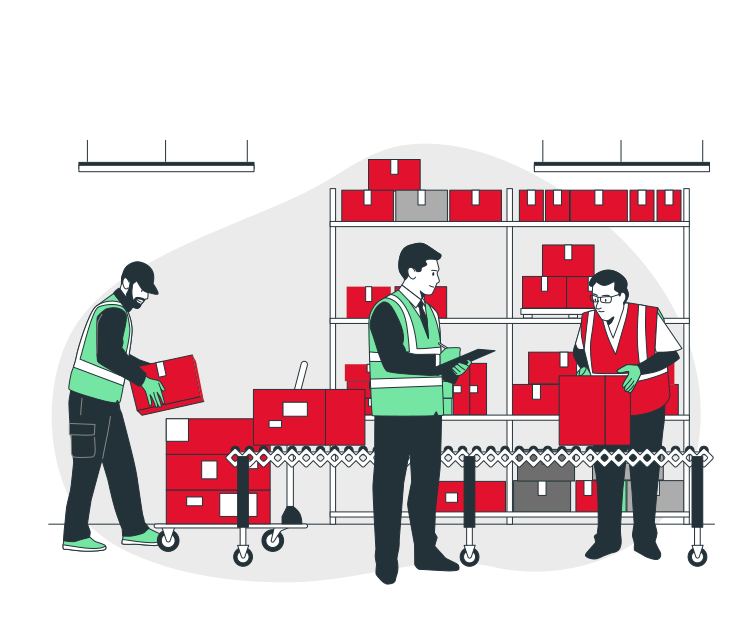
A Warehouse Management System is software that enables businesses to manage warehouse operations digitally. Commonly abbreviated as WMS, a Warehouse Management System makes goods receipt, inventory tracking, bin and location management, putaway, order picking, packing, stocktaking, and shipping more controlled and traceable.
Warehouses are more than just storage areas for products; they are critical links between purchasing, production, sales, quality control, and shipping processes. Stock errors, incorrect product dispatch, location mix-ups, or delayed shipments can directly impact production plans, customer satisfaction, and costs. A Warehouse Management System reduces these risks, enabling businesses to manage their warehouses faster, more accurately, and more efficiently.
What is a Warehouse Management System?
What does Warehouse Management System mean?
A Warehouse Management System is a system that enables the digital tracking of products, stocks, locations, and movements within a warehouse. The system allows you to track when a product entered the warehouse, where it was placed, which order it was picked for, who processed it, and when it was shipped.
Are WMS and Warehouse Management System the same thing?
Yes. WMS is the abbreviation for Warehouse Management System. WMS software enables warehouse processes to be managed through digital workflows instead of manual tracking. This structure offers significant advantages, especially for businesses with a high volume of inventory movements.
Why is a Warehouse Management System important?
Accessing accurate information is critical in warehouse operations. If a product shown in stock is not physically present in the warehouse, if a product is in the wrong location, or if the wrong product is picked for an order, the entire business operation can be affected. A Warehouse Management System reduces these problems by keeping warehouse data up-to-date and reliable.
What are the advantages of using a Warehouse Management System?
Improves inventory accuracy.
One of the most important advantages of using a Warehouse Management System is that it increases inventory accuracy. Product entries, exits, transfers, and counting results are recorded on the system. This reduces the difference between the stock shown in the system and the physical stock. Up-to-date inventory information provides more reliable data for purchasing, production planning, and sales processes.
It makes product movements traceable.
Having traceable movement of every product in the warehouse provides a significant advantage in terms of operational control. It's possible to retrospectively examine when a product entered the warehouse, to which location it was moved, which user processed it, and for which order it was shipped. This structure reduces product loss and operational complexity.
It simplifies shelf and location management.
The Warehouse Management System allows for the definition of shelves, aisles, areas, zones, and locations within the system. Since products are associated with specific locations, product search time is reduced. Operators can see where each product is located through the system. This reduces time wasted within the warehouse and increases operational speed.
It speeds up the goods receiving process.
Receiving products from suppliers into the warehouse is a process that needs to be done accurately and quickly. A Warehouse Management System ensures that data such as product code, quantity, batch number, serial number, expiration date, and supplier information are systematically recorded. This allows the goods receiving process to proceed in a more organized and controlled manner.
Reduces order picking errors.
One of the most common problems in warehouse operations is picking the wrong product or preparing incomplete products. A Warehouse Management System guides the picking process by indicating which product should be picked from which location according to the order. Using barcodes or QR codes, it can be verified that the correct product is being picked for the correct order.
It improves shipping accuracy.
Errors made during the shipping process directly affect customer satisfaction. Sending the wrong product, incomplete packaging, or incorrect quantity information can lead to both customer complaints and additional costs. A Warehouse Management System increases shipping accuracy by digitally tracking packaging and shipping processes.
It simplifies inventory counting.
Regular inventory counts in warehouses are crucial for stock accuracy. A Warehouse Management System can support periodic counts, cycle counts, location-based counts, or product-based counts. Count results are compared with system stock, and discrepancies can be analyzed. This makes stock control more organized.
It supports FIFO and FEFO tracking.
Warehouse Management Systems help determine the priority of product shipment based on arrival date or expiration date. FIFO means the first product in, first out; FEFO means the product with the nearest expiration date is shipped first. This feature provides a critical advantage, especially for food, pharmaceuticals, chemicals, and products with a long shelf life.
It enables barcode-based warehouse management.
Warehouse Management Systems can work with technologies such as barcodes, QR codes, and handheld terminals. When products, shelves, pallets, and boxes are identified with barcodes, operations are performed faster and more accurately. The barcode-based process structure reduces errors caused by manual data entry and makes warehouse operations more controlled.
It enables more efficient use of storage space.
The efficient use of warehouse space offers a significant cost advantage for businesses. A Warehouse Management System supports a more planned placement of products in different locations. Rules such as keeping high-turnover products in easily accessible areas and moving slower-moving products to different zones can increase warehouse efficiency.
It increases operational speed.
Manual tasks such as product searching, record checking, order preparation, and inventory counting in a warehouse are time-consuming. A Warehouse Management System digitizes these processes, increasing operational speed. Operators can see what they need to retrieve, from where, and for which operation through the system. This reduces the daily workload.
It strengthens data flow between departments.
Warehouse data is important not only for the warehouse team, but also for the purchasing, production, sales, quality, and finance teams. A Warehouse Management System helps to share inventory and product movement information more accurately with other departments. This allows for healthier decision-making across the entire business.
It supports production processes.
Manufacturing businesses need timely access to accurate raw material and supply information. A Warehouse Management System makes it possible to track the stock status, location, and batch information of raw materials required for production. This structure contributes to production planning being based on more reliable data.
It strengthens traceability and audit preparedness.
Traceability of product movements is crucial, especially in regulated sectors. A Warehouse Management System supports audit processes by keeping records of batch numbers, serial numbers, expiration dates, entry dates, exit dates, and user transactions. It also provides quick access to past transactions.
It makes warehouse performance measurable.
The Warehouse Management System makes data from warehouse operations reportable. Data such as goods receiving time, order picking speed, shipment accuracy, stock discrepancies, location occupancy rate, and transaction volume can be analyzed. These reports help improve warehouse processes.
How does a Warehouse Management System differ from manual warehouse management?
In manual warehouse management, product movements can be managed using paper forms, Excel files, or personal tracking. This can lead to stock errors, product loss, and information up-to-date issues. A Warehouse Management System, on the other hand, digitally records all warehouse movements, making warehouse data more reliable.
Does a Warehouse Management System provide a cost advantage to a business?
Yes. A Warehouse Management System can provide cost advantages by reducing inventory errors, product losses, incorrect shipments, unnecessary product searching times, and the risk of excess inventory. More accurate inventory management also contributes to more efficient purchasing and production planning processes.
Which systems can the Warehouse Management System integrate with?
Warehouse Management Systems can integrate with ERP, EBR, QMS, LIMS, production management systems, e-commerce platforms, and shipping systems. For example, a purchase order from an ERP system can initiate the goods receiving process on the WMS, or the movement of raw materials required for production can be tracked through the warehouse system.
Is a Warehouse Management System necessary for small warehouses?
Warehouse Management Systems are beneficial not only for large warehouses but also for small and medium-sized businesses with regular inventory movements. As product variety, order numbers, and locations increase, manual tracking becomes difficult. Therefore, implementing digital warehouse management early on provides a scalable structure for the business.
What should be considered when choosing a Warehouse Management System?
When choosing a Warehouse Management System, factors such as warehouse size, product variety, location structure, barcode usage, batch and serial number tracking, FIFO/FEFO requirements, integration expectations, reporting capabilities, and ease of use should be considered. The system should be flexible enough to adapt to the company's warehouse operations.
Conclusion
Using a Warehouse Management System provides significant advantages to businesses in terms of inventory accuracy, traceability, operational speed, location control, shipment accuracy, and warehouse efficiency. Digitally managing all warehouse movements from receiving to shipping simplifies daily operations and helps businesses make more accurate decisions based on data. For businesses aiming for speed, accuracy, and control in their warehouse processes, a Warehouse Management System is a powerful digital transformation solution.
To learn more about Centra solutions, you can contact us through the information request form.
