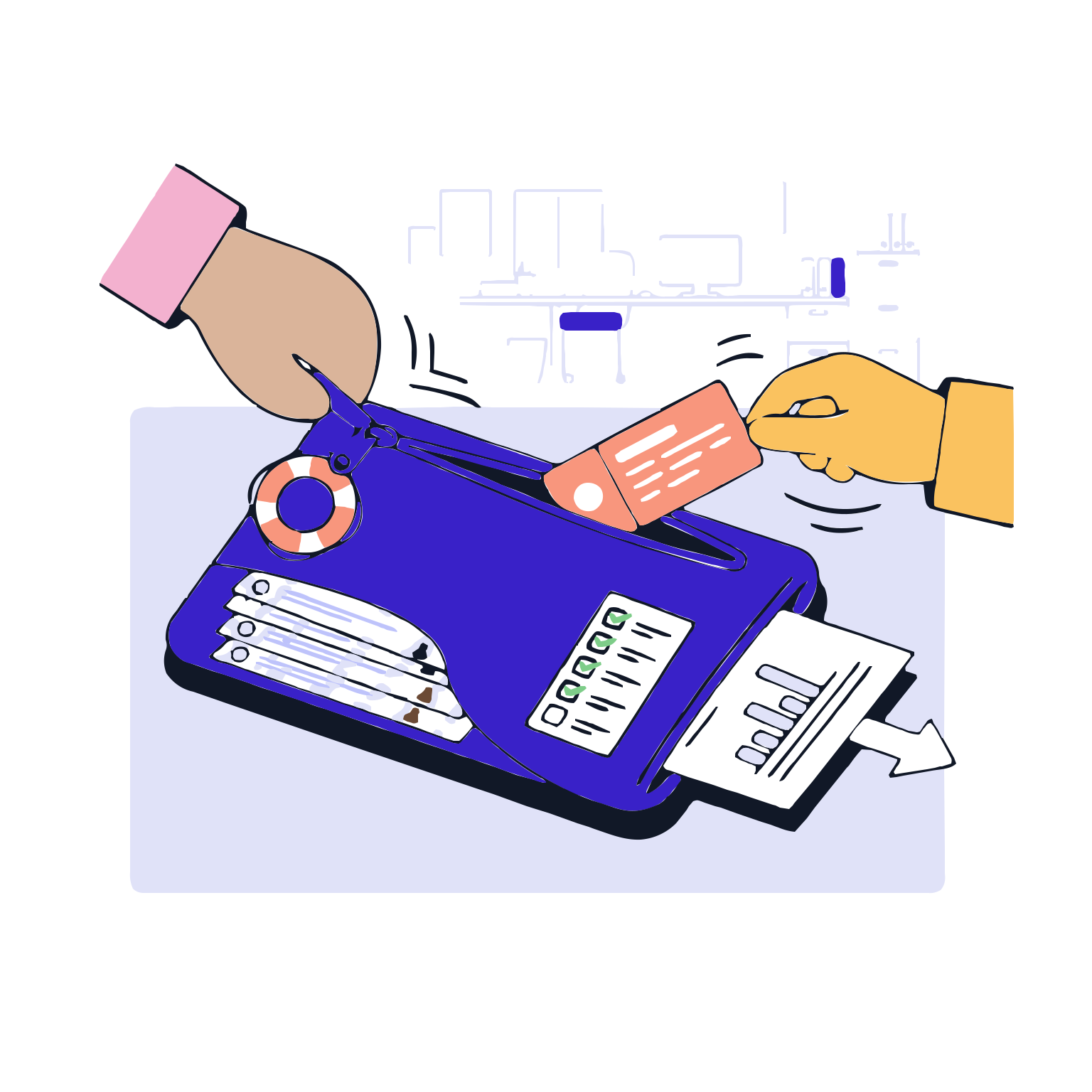
Exception and Deviation Management

In production, perfection is not expected; what matters is how to manage the unexpected well. The Exception and Deviation Management module highlights deviations during production, collects necessary records correctly, and controls the process. Thus, issues do not slip through the cracks, a quality discipline based on documented and controlled quality is formed instead of reactive problem-solving.

With this module, operators can report issues correctly; the system links the required documentation for each exception and deviation. Production process disruptions are more controlled; quality inspections and decisions are faster and clearer; a robust audit trail is established in the inspection.


Request a Demo

Exception and Deviation Management
Exception and Deviation Management; captures and records issues such as exceeding limits, missing records, incorrect materials/equipment, off-process interventions that occur during production steps. It classifies exceptions, opens deviation records when required, collects…
Alerting and Trapping
Categorization and Severity
Record and Document Management
Effect Evaluation
Action and Approval Processes
Closure and Audit Preparation
Alerting and Trapping

Alerting and Trapping

Exceptions or deviations appear in two ways on-site: the system automatically alerts or the user reports. This step ensures that abnormal conditions are visible without delay.

Features

  •  Automatic Alerters
  •  Manual Alerts
  •  Step-based exception detection
  •  Time-stamped event logging

Automatic Alerters
Automatically triggers exceptions/deviations processes in cases of limit violations or missing required fields.

Manual Alerts
Ensures operators report issues they observe on-site in a controlled manner.

Step-based exception detection
Aligns the event with the step where it occurred to provide the correct context.

Time-stamped event logging
Clarifies when the event occurred to strengthen traceability.

Categorization and Severity

Categorization and Severity

Not all exceptions are equally severe. This step categorizes the nature and severity of the event; it aligns the correct workflow and approval path.

Features

  •  Event Classification
  •  Severity Determination
  •  Rule-Based Guidance
  •  Automatic Shutdown in Critical Situations

Event Classification
Categorizes types such as materials, equipment, parameters, records, and off-process interventions.

Severity Determination
Determines the importance of an event to ensure actions are taken at the appropriate level.

Rule-Based Guidance
Exceptions are warranted for certain types of events, deviations are managed according to the rule set for others.

Automatic Shutdown in Critical Situations
Halts steps or batches in high-risk situations to prevent the escalation of errors.

Record and Document Management

Record and Document Management

The strength of corrective action management is the strength of record keeping. Here, the details of what happened, how it was detected, and why it occurred are recorded. Incomplete or ambiguous records are avoided.

Features

  •  Requirement for mandatory fields in record discipline
  •  Requirement for justification and explanations
  •  Evidence and Additional Files
  •  Automatically associate with relevant records

Requirement for mandatory fields in record discipline
Prevents the closure of a record if critical information is incomplete or unclear.

Requirement for justification and explanations
Clarifies the background of an event to speed up the inspection process.

Evidence and Additional Files
Enhances the inspection power by linking evidence such as photographs or documents.

Automatically associate with relevant records
Linking the event to the user, equipment, materials, and parameters.

Effect Evaluation

Effect Evaluation

The effect of the event is the cornerstone of the decision. At this stage, the impact of the deviation on the product, process, and safety is evaluated; the need for additional controls or inspections becomes apparent.

Features

  •  Identification of Affected Areas
  •  Notations of Product and Process Impact
  •  Need for Additional Controls and Inspections
  •  Supporting Decision Information

Identification of Affected Areas
Identifies which steps, records, and sources were affected.

Notations of Product and Process Impact
Gathers explanations that will form the foundation of the quality evaluation.

Need for Additional Controls and Inspections
Highlights needs for additional samples, controls, revalidation, etc.

Supporting Decision Information
Summarizes the information needed for the inspection team to make quick decisions.

Action and Approval Processes

Action and Approval Processes

Each deviation requires an action plan. This stage defines the corrective action steps, assigns responsible parties, and ensures that the required approvals are executed under process control. The process progresses under process control.

Features

  •  Identification of Corrective Actions
  •  Assignment of Responsible Parties and Terms
  •  Flow of Approval and Authorization
  •  Traceability and Lag Visibility

Identification of Corrective Actions
Identifies actions to mitigate or address the deviation; reduces lag.

Assignment of Responsible Parties and Terms
Ensures that corrective actions are traceable on-site; reduces lag.

Flow of Approval and Authorization
Enables appropriate role approvals in critical actions to strengthen control.

Traceability and Lag Visibility
Highlights open actions and lagging steps; simplifies management.

Closure and Audit Preparation

Closure and Audit Preparation

Exception and deviation management is tied to the closure discipline. This stage prevents incomplete actions during closure, packages the records, and ensures traceability in the audit.

Features

  •  Batch Closure Checklist
  •  Open Action Control
  •  Historical records and time stamps
  •  Ready-to-Print Audit Reports

Batch Closure Checklist
Standardizes the minimum requirements for closure; reduces the risk of incomplete closure.

Open Action Control
Ensures quality discipline during closure by preventing incomplete actions; generates evidence in audits.

Historical records and time stamps
Strengthens the audit trail by recording who did what, when; simplifies audits.

Ready-to-Print Audit Reports
Reports exceptions and deviations to streamline the inspection and audit processes.