

 Türkçe
 English
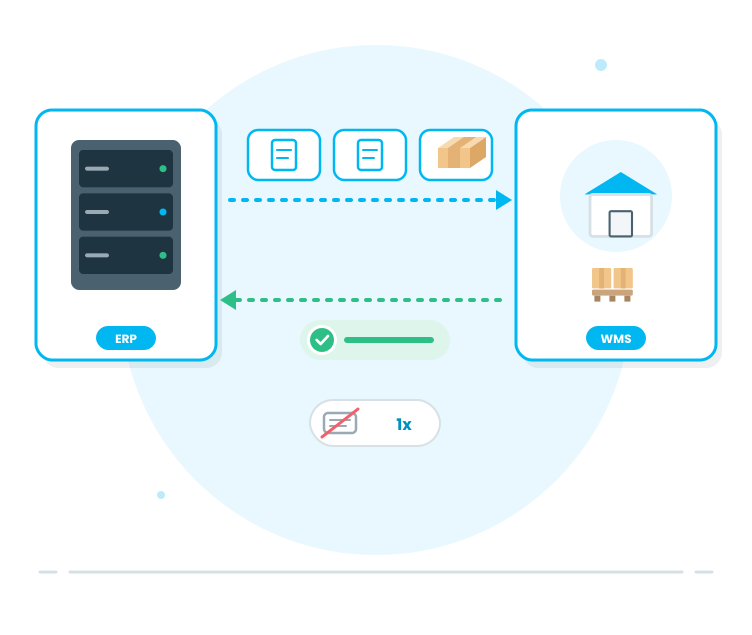
ERP (Enterprise Resource Planning) manages the planning, inventory, procurement, and finance layer of a business, while MES (Manufacturing Execution System) manages the real-time execution of work orders on the shop floor. ERP answers the question "what will be produced, when, and how much," while MES monitors "which machine, which operator, and which parameters are being used for production right now."
In practice, the two systems are often confused: ERP's production module is mistaken for MES, or MES is expected to handle inventory valuation. The two systems are not alternatives to each other; they are complementary. In this article, we cover the core differences between ERP and MES, which process should be managed in which system, and how the two systems work together. The article is written for decision-makers at companies in regulated manufacturing industries such as pharmaceuticals, food, and chemicals.
Where Do ERP and MES Differ?
1. Operating Layer and Time Scale
ERP operates at the business level and plans on a scale of days, weeks, and months. The master production schedule, Material Requirements Planning, and cost accounting sit in this layer. MES, on the other hand, operates at the shop-floor level; it records machine status, operator actions, and process parameters on a scale of seconds and minutes. In the ISA-95 model, ERP is defined as level 4 and MES as level 3. Because of this layer difference, hours can pass between ERP seeing a work order as "completed" and MES recording the last pallet of the same order; if the two systems are not connected, this gap turns into inventory and cost errors.
2. Type of Data Managed
In ERP, data is transaction-oriented: orders, stock movements, invoices, purchase orders. In MES, data is event-oriented: the machine started, the batch was completed, the temperature went outside the limit, the operator signed. This difference determines everything from the database structure to the user interface of the two systems. While ERP holds the total consumption of a batch in a single line, MES separately stores which operator weighed which raw material at which minute in that same batch. In regulated industries, the record an auditor asks for is usually this second level of detail.
3. User Profile
ERP is used by planning, procurement, finance, and warehouse teams, who work at a screen in an office environment. MES is used by operators, shift supervisors, and quality control personnel, who work on touchscreens, handheld terminals, or line-side panels, often wearing gloves. For this reason, MES interfaces are designed with large buttons and a step-by-step guided structure. On an ERP screen, a planner wants to see dozens of columns at once, whereas on an MES screen an operator needs to see only a single instruction at a time.
ERP decides what the business will produce; MES records how that decision is carried out on the shop floor. The absence of one leaves the other's data blind.
Which Process Should Be Managed in Which System?
4. Processes That Should Stay in ERP
- Demand and production planning: Sales forecasts, the master production schedule, and Material Requirements Planning.
- Procurement and supply: Supplier management, ordering, goods receipt, and invoice matching.
- Inventory and cost: Warehouse balances, lot-based inventory value, product cost, and financial reporting.
- Orders and shipment: Customer orders, delivery planning, and invoicing.
- Financial impact of quality decisions: Removing a rejected batch from inventory, returns, and cost impact.
5. Processes That Should Stay in MES
- Work order execution: Step-by-step instructions to the operator, material verification, and electronic signature.
- Machine data collection: Automatic recording of data such as downtime, speed, temperature, and pressure from PLCs and sensors.
- Real-time quality control: Line-side measurements, out-of-limit alerts, and deviation records.
- Performance monitoring: OEE, cycle time, scrap rate, and shift-based efficiency.
- Electronic Batch Record: An audit trail that answers the questions of who performed each production step, when, and with what value.
6. How the Two Systems Work Together
The right setup is for work order, recipe, and material information to be sent from ERP to MES, and for production confirmation, actual consumption, scrap, and time data to flow back from MES to ERP. Thanks to this loop, the inventory and cost data in ERP is based on the actual shop floor rather than on estimates. Without integration, the same data is entered separately into two systems, differences require manual reconciliation at the end of each shift, and inconsistencies between records raise questions during an audit. Because Centra ERP and Centra MES run on the same Konektom platform, this data flow does not require a separate integration project. For the planning side, see our article on production planning with ERP, and for the shop-floor side, our article on OEE management.
Can MES be used without ERP?
Technically yes, but work orders and material data must be entered manually, and Traceability and cost tracking become weaker. It can be a temporary solution in small facilities, but for growing businesses, ERP integration becomes unavoidable.
Does ERP's production module replace MES?
No. The ERP production module works at the planning and reporting level; shop-floor functions such as machine data collection, operator guidance, and real-time quality control belong to MES.
What data do ERP and MES share?
Work order, recipe, and material information goes from ERP to MES; production confirmation, consumption, scrap, and downtime data returns from MES to ERP. This loop usually runs in real time or at the end of each shift.
Conclusion: The difference between ERP and MES is not a question of "which is better" but a question of layers. The investment order is usually ERP first, then MES; however, if paper records are heavy on the shop floor and audit pressure is high, prioritizing MES is also possible. Planning, inventory, and finance should stay in ERP; execution, data collection, and shop-floor quality should stay in MES. Especially in pharmaceutical, food, and chemical production, batch Traceability and GMP compliance depend on uninterrupted data exchange between the two systems. To clarify together which process should belong to which system in your business, get in touch.