

 Türkçe
 English
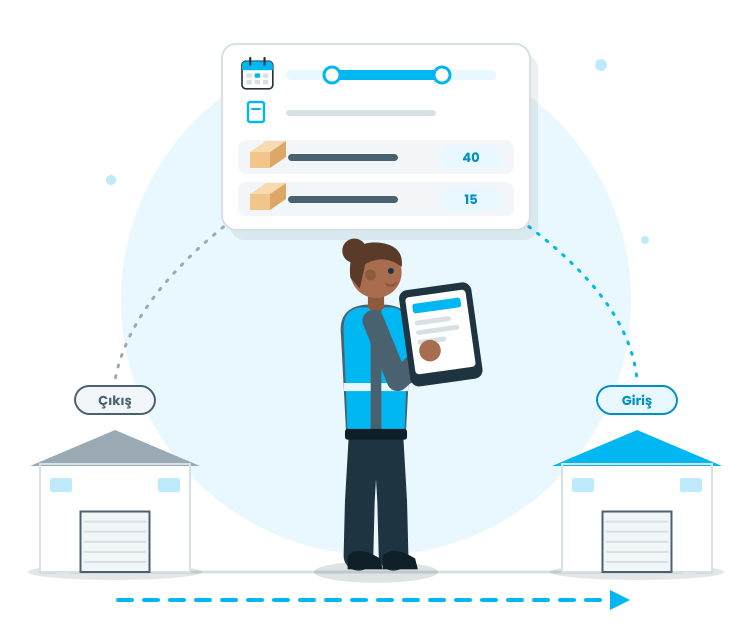
WMS (Warehouse Management System) is a digital system that manages not only the quantity of products in a warehouse but also their physical location. Shelf and location management is one of the core functions of WMS, enabling the tracking of products based on aisle, shelf, bin, pallet area, or specific warehouse zones.
The goal of shelf and location management is to instantly show the physical location of a product within the warehouse, reduce placement errors, and make product movements more controlled. Especially in businesses with high product variety or heavy warehouse traffic, accurate location information management directly impacts the speed of picking, counting, transferring, and shipping processes.
The Basic Structure of Shelf and Location Management with WMS
1. Defining Warehouse Areas on the System
The first step in racking and location management is defining the physical warehouse structure on the WMS. The warehouse can be divided into sub-locations such as zones, aisles, racks, floors, bays, pallet areas, or dedicated storage areas.
A unique location code is generated for each physical location. This allows the system to show not only which warehouse the product is in, but also its exact location within the warehouse.
2. Creating Shelf and Location Codes
Systematically coding locations is crucial in warehouse operations. For example, a location code can carry information about the warehouse, aisle, shelf, and bin within the same structure. This allows users to easily understand the physical location of a space using the code.
This coding structure can be supported by barcodes or QR codes. By scanning the location label, the operator can perform product placement, transfer, or counting operations more quickly.
3. Placing Products in Appropriate Locations
After goods receipt is complete, the placement location for the products can be determined via WMS. The system can suggest suitable locations based on product type, volume, weight, inventory turnover rate, or storage conditions.
This structure allows for more efficient use of space in the warehouse. Fast-moving products can be placed closer to the shipping area, while products with lower turnover rates can be kept in different areas.
4. Performing Location-Based Inventory Tracking
WMS can track the quantity of each product available at each location separately. If the same product is found on different shelves, the quantity at each location can be viewed separately.
This feature provides physical warehouse visibility beyond total stock information. When searching for a product, the system allows the operator to see which shelf, which bin, and how much of the product is located there.
5. Location Verification via Barcode
Location barcoding strengthens the matching of physical movements with digital records. When placing or picking up products, the operator can scan the location barcode first, then the product barcode.
The system can compare the scanned location with the expected location. Alerts can be generated if the wrong shelf or product is selected. This reduces errors caused by manual location entry.
How does location management improve warehouse operations?
6. Controlled Management of Intra-Warehouse Transfers
Moving products from one location to another is a natural part of warehouse operations. With WMS, the transfer process can be recorded using source and destination location information.
Once the transfer is complete, the quantity of the product at the old location decreases, and the quantity at the new location is updated. Thus, when the product is physically moved, the system record changes simultaneously.
7. Optimizing Order Picking Routes
Shelf and location information plays a crucial role in the order picking process. WMS knows the locations of the products in an order and can show the operator the picking sequence.
Picking routes can be optimized based on the physical arrangement of locations. This structure helps speed up warehouse operations by reducing unnecessary walking and searching time.
8. Monitoring Capacity and Occupancy
The capacity of locations can be defined on WMS. The maximum volume, weight, or product capacity of a shelf or pallet area can be recorded in the system.
This information helps identify overcrowded or underutilized locations. Warehouse managers can better plan available space and detect capacity issues earlier.
9. Location-Based Management of Census Processes
Physical counting operations can be scheduled on a location basis. The operator can go to a specific shelf or warehouse area, count the products in that location, and record the results in the WMS.
The system can compare physical inventory counts with existing stock records. Locations with discrepancies can be quickly identified, and necessary investigations and corrections can be made.
10. Analyzing Location Performance
The movement data collected on WMS can be used to analyze how efficient warehouse layout is. It can show which locations are picking more products, which areas are experiencing high congestion, and which areas are underutilized.
This data can be used to reorganize warehouse layouts, move fast-moving products to more suitable areas, and reduce operational bottlenecks.
What is WMS Location Management?
WMS location management involves digitally identifying physical spaces within a warehouse and associating products with these spaces. The system shows not only whether a product is in stock, but also which shelf or bin it is located in.
What is the difference between shelf management and inventory management?
Inventory management focuses on knowing how much of each product is available in the business. Shelf and location management, on the other hand, tracks where these stocks are physically located. WMS manages these two structures together, providing both quantity and location information.
Can a product be stored in multiple locations?
Yes. The same product can be stored in different shelf, warehouse, or pallet areas. WMS can track the quantity at each location separately and calculate the total available stock information based on these records.
Can WMS automatically suggest a location?
Depending on the WMS's structure, suitable location suggestions can be generated taking into account product characteristics, available capacity, inventory turnover rate, or warehouse regulations. Thus, placement decisions are not solely dependent on operator experience.
How does barcode-based location management work?
Each shelf or warehouse area is fitted with a unique barcode label. The operator scans this label during product movement. By scanning the label along with the product barcode, the system can verify which product has been placed in which location.
How Location Management Speeds Up Order Picking?
Since the physical location of the product is known in the system, the operator does not need to search for the product within the warehouse. WMS can organize the picking list according to location and create shorter picking routes.
Which systems can WMS integrate with?
WMS can integrate with enterprise systems such as ERP, EBR, QMS, and LIMS. Order and stock information from ERP can be linked to warehouse operations, raw materials to be sent to production can be prepared for EBR, and stocks with quality status can be managed in specific locations via QMS.
What are the benefits of shelf and location management for a business?
Shelf and location management reduces product search time, lowers the risk of misplacement, speeds up picking operations, helps utilize warehouse capacity more efficiently, and strengthens the alignment between physical and system inventory.
Conclusion
With WMS, rack and location management enables the digital identification of every physical space within the warehouse and the association of products with these spaces. The location of products in aisle, rack, bin, or pallet area can be tracked in real time.
This structure contributes to faster and more controlled execution of goods receiving, placement, transfer, picking, counting, and shipping operations. Location management is one of the most critical functions of a WMS, especially for businesses with high product variety and heavy warehouse traffic.
To learn more about Centra solutions, you can contact us through the information request form.
